Choosing Paint Finishes for Walls vs Woodwork: What Works Best in Older Hertfordshire Homes
Choosing the right paint finish for walls and woodwork makes a real difference to durability and looks. Expert advice from Bishops Painting & Decorating Services.

Why the finish matters as much as the colour
Most people spend a long time choosing a colour and very little time thinking about the finish. That's understandable. Colour is what you see first. But the finish is what decides how the room wears, how easy it is to clean, and whether the woodwork still looks sharp two years down the line. Get it wrong and even a beautiful colour can look flat, chalky or scuffed within months.
We've been painting and decorating homes and commercial premises across Bishop's Stortford, Sawbridgeworth, Harlow, Stansted Mountfitchet, Much Hadham, Great Dunmow and Takeley for over 20 years. In that time, we've seen the same mistakes made again and again. Usually, they come down to using the wrong finish in the wrong place.
This guide explains the main paint finishes available for walls and woodwork, where each one belongs, and what to think about before you pick up a brush or call a decorator.
Understanding sheen levels: from matt to gloss
Paint finishes sit on a spectrum from completely flat to highly reflective. Here's how to think about them.
Matt has no sheen at all. It absorbs light rather than reflecting it, which makes it very forgiving on walls that aren't perfectly smooth. Older properties across Bishop's Stortford and the surrounding villages often have walls with minor imperfections, and a good matt finish is the kindest option. The trade-off is that it marks more easily and doesn't wipe clean as readily as a higher sheen.
Eggshell sits just above matt. It has a very subtle, soft sheen, a bit like the surface of an egg. On walls, it gives a more refined, slightly warmer look than flat matt. On woodwork, it's become a popular alternative to full gloss because it's less harsh and more forgiving if the surface isn't perfectly prepared. That said, preparation still matters enormously. More on that shortly.
Satin is the middle ground. It has a noticeable but not overpowering sheen, and it's genuinely practical. On woodwork, skirting boards, door frames and staircases, satin holds up well to everyday knocks and is easy to wipe down. On walls in kitchens, hallways and children's rooms, it earns its keep. It won't hide surface imperfections as well as matt, so the prep work has to be solid.
Semi-gloss and gloss are the most reflective finishes. Full gloss on woodwork is a classic choice and it's durable, hardwearing and easy to clean. But it is unforgiving. Every brush mark, every grain in the wood, every imperfection in the surface will catch the light. This is why professional preparation is so important. Proper filling, sanding and priming before applying a gloss finish is what separates a result that looks sharp from one that looks rushed.
Matching the finish to the room and the surface
The right finish isn't the same in every room or on every surface. Here's a straightforward way to think about it.
Living rooms and bedrooms: Matt or a quality flat emulsion on the walls is usually the right call. These are the rooms where you want the colour to sit quietly and the finish to look considered. For the woodwork, satin or eggshell gives a cleaner look than gloss without the harshness.
Hallways, stairs and landings: These take a battering. Shoes scuff skirting boards, hands touch walls, bags knock door frames. A tougher finish makes sense here. Satin on the walls and gloss or satin on the woodwork will last far better than a delicate matt. If you're thinking about transforming a tired staircase, the finish choice is as important as the colour. Take a look at our thoughts on Interior Painting and Decorating in Bishop's Stortford: Walls, Ceilings and Woodwork Explained for more on getting these areas right.
Kitchens and bathrooms: Moisture is the enemy. A finish with some sheen resists condensation better than a flat matt. Satin or eggshell on the walls, gloss or satin on the woodwork. Good ventilation matters too, but the right paint finish gives you a head start.
Commercial spaces: Offices, shops and business premises in Harlow, Bishop's Stortford and Great Dunmow need finishes that can handle regular cleaning and heavy use. A durable satin or eggshell on the walls and a hardwearing finish on all woodwork is the sensible approach. We cover this in more detail when talking about our commercial work, but the principle is the same: match the finish to how the space is actually used.
Woodwork deserves its own preparation
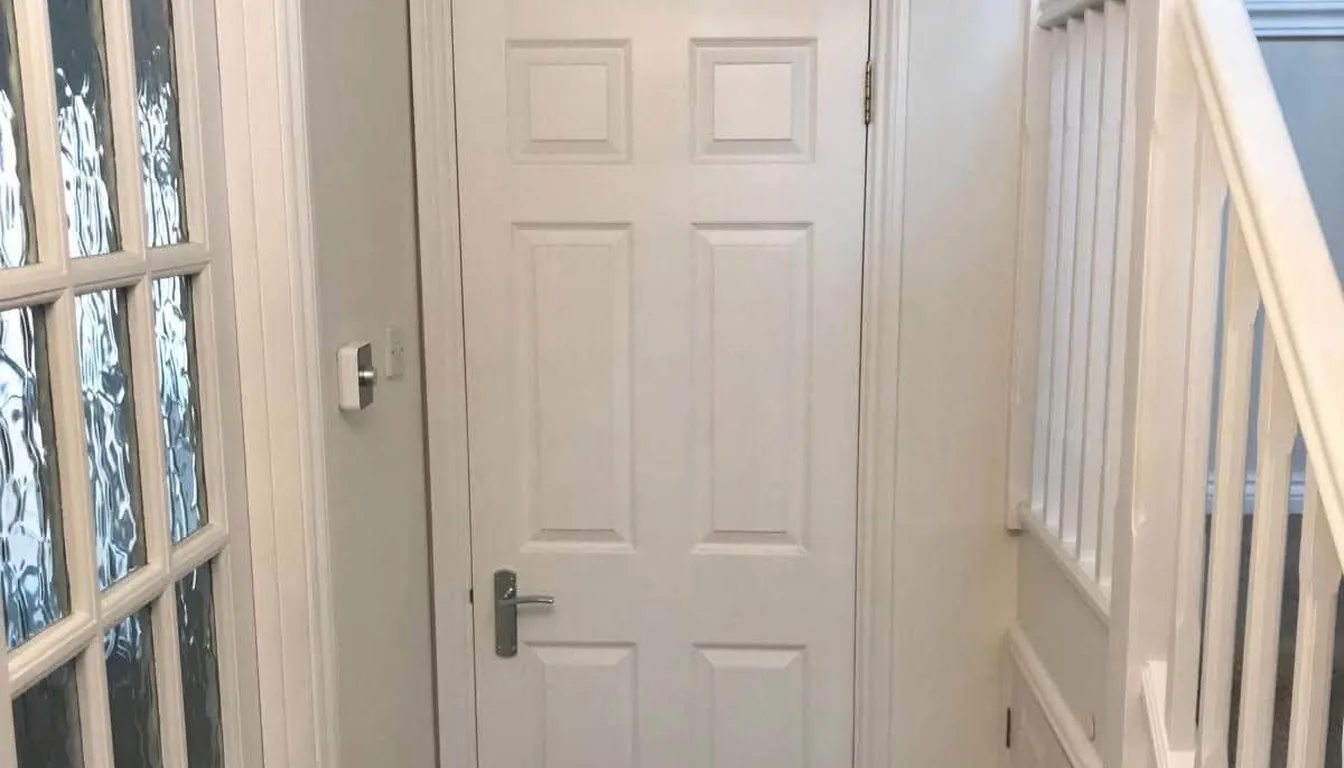
Woodwork is where the finish really shows up. Doors, frames, skirting boards, staircases and fireplace surrounds are all surfaces that people touch, lean against and look at closely. They also expand and contract with changes in temperature and humidity. That movement can crack paint if the surface hasn't been properly prepared.
Good woodwork preparation means:
- Cleaning the surface thoroughly
- Sanding back to a smooth, key-ready surface
- Filling any cracks, dents or open grain
- Applying the right primer or undercoat
- Sanding lightly between coats
Only after all of that does the finish coat go on. Cut corners on any of those steps and the result will show, no matter how good the paint itself is.
This is especially relevant in older properties across Much Hadham, Sawbridgeworth and the period homes found throughout Bishop's Stortford. Old woodwork can have years of built-up paint layers, bare patches, and surfaces that have never been properly keyed. Getting it back to a good base takes time, but it's the only way to achieve a finish that looks right and lasts.
Exterior woodwork: a different challenge
Outside, the demands on a paint finish are far greater. Window surrounds, sills, external door frames and any exposed timber face rain, UV light, frost and everything in between. A finish that works well inside won't necessarily hold up outdoors.
For exterior woodwork, a flexible, hardwearing finish is essential. The paint needs to move with the timber as it expands and contracts through the seasons. If it can't, it will crack and peel, letting moisture in behind it. Once that happens, you're not just repainting, you're repairing.
The preparation principles are the same as for interior woodwork, but even more critical outside. Any bare timber needs to be primed before a finish coat goes on. Exposed end grain is particularly vulnerable and needs special attention.
If you're thinking about refreshing the outside of your home before putting it on the market, the condition of the exterior woodwork is often the first thing buyers notice. We've written about this in more detail in our piece on Refreshing Your Home Before Selling or Letting: A Decorator's View from Hertfordshire.
Colour and finish working together
One thing worth knowing: the same colour in different finishes can look quite different on the wall. A deep navy in matt looks rich and velvety. The same navy in satin looks slightly lighter and more polished. Neither is wrong, but they create different effects.
If you're unsure, we're happy to talk through colour and finish choices as part of the quoting process. Advice on interior colour design is something we offer as a matter of course, because a well-chosen finish is part of getting the whole job right.
Frequently asked questions
What's the best paint finish for a hallway with young children? Hallways take more punishment than almost any other room. A satin finish on the walls gives you something that can be wiped down without damaging the surface. For skirting boards, door frames and banisters, a hardwearing satin or gloss finish is the practical choice. Matt can look beautiful, but it marks easily and doesn't clean as well in high-traffic areas.
Should I use the same finish on walls and woodwork in the same room? Generally, no. Most decorators, including us, would use a matt or eggshell on the walls and a satin or gloss on the woodwork. The contrast between the two finishes is part of what gives a room a finished, considered look. Using the same finish throughout can make everything feel flat.
Why does gloss woodwork sometimes look patchy or show brush marks? Usually, this comes down to preparation and application. Gloss is the most unforgiving finish because it reflects light directly. Any imperfection in the surface, or any unevenness in the application, shows up clearly. The solution is thorough preparation: filling, sanding, priming and applying the finish in thin, even coats. Rushing any of those stages is what causes patchy results.
Does the finish choice make a difference for exterior masonry as well? Yes. Rendered and masonry walls outside need a breathable finish that allows moisture to escape while keeping water out. Using an interior finish or a non-breathable paint on external masonry can trap moisture behind the surface, leading to peeling and damp problems. It's one of the reasons getting the right product for the right surface matters as much outside as it does in.
Ready to get the finish right?
Whether you're decorating a single room in Takeley, refreshing woodwork throughout a period home in Bishop's Stortford, or looking at a commercial repaint in Harlow or Great Dunmow, the finish choice matters. We're a family-run business with over 20 years of experience in residential and commercial painting and decorating, and we take real pride in getting the detail right.
Call us on 07443 679900 to talk through what you need. We'll ask the right questions, take a proper look at the job, and make sure the finish we recommend is the one that will actually last.