Exterior Painting in Autumn: Is October Still the Right Time in Hertfordshire?
Thinking about exterior painting this autumn in Hertfordshire? Here's what to know about timing, prep and getting a finish that lasts through winter.

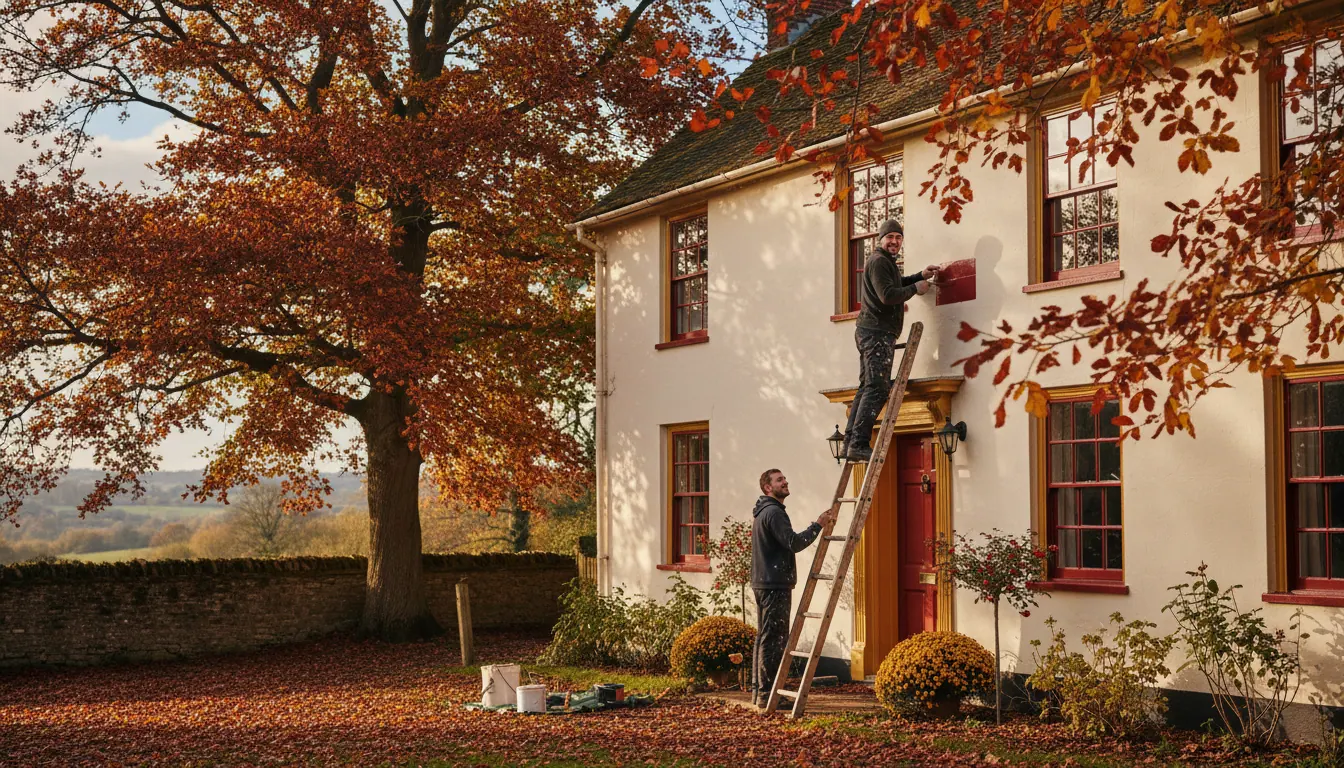
The autumn window for exterior painting is real, but it is shorter than most people think
Autumn catches a lot of Hertfordshire homeowners off guard. The summer rush fades, the school run restarts, and suddenly it is October and the outside of the house still needs doing. The good news: autumn can be a genuinely good time for exterior painting across Bishop's Stortford, Harlow, Great Dunmow and the surrounding area. The bad news: the usable window closes faster than people expect, and preparation time eats into it more than the painting itself.
We have been painting and decorating in this part of Hertfordshire and Essex for over 20 years. This article is a straight-talking guide to what autumn exterior painting actually involves, when it works, when it does not, and what to do if you want the job done before the weather turns.
Why autumn can work well for exterior painting in Hertfordshire
The assumption that exterior painting is a summer-only job is not quite right. In fact, late summer and early autumn often produce better conditions than July and August. Here is why.
Paint does not like extreme heat. When surfaces bake in direct sun, paint can skin over before it has properly bonded, leaving a finish that looks fine at first but fails early. In September and October across Hertfordshire, temperatures tend to be milder and more consistent. There is less harsh sun, surfaces stay cooler, and paint has more time to cure properly.
The key conditions we work to:
- Surface temperature above 5°C (and ideally above 10°C)
- No rain forecast for at least 24 hours after application, preferably 48
- Relative humidity low enough for the surface to be genuinely dry
- No frost in the overnight forecast
In Bishop's Stortford, Stansted Mountfitchet, Sawbridgeworth and the villages around Much Hadham and Takeley, these conditions can hold well into October in a normal year. November is a different matter, which we cover below.
What exterior painting actually involves: it is mostly preparation
This is the part that surprises people most. A significant portion of any exterior painting job is preparation, not painting. Get the prep wrong and even the best applied coat will fail within a season.
For masonry and rendered walls, preparation typically includes:
- Inspecting for cracks, loose render or areas of blown surface
- Cleaning down: moss, algae, dirt and chalky old paint all need to come off before a new coat goes on
- Filling and allowing filler to cure fully before painting over it
- Priming any bare or repaired areas
For window surrounds, sills, fascias and outside woodwork, the process is more involved. Old paint that is flaking, bubbling or cracking needs to be stripped back to a stable surface. Any bare wood needs to be primed. Joints and gaps need to be sealed. Only then does topcoating make sense.
This is why autumn timing matters so much. If you want a finished job before the weather closes in, you need to factor in the preparation time, not just the painting days.
Masonry and rendered walls: what changes in autumn
Rendered and masonry walls across this part of Hertfordshire and Essex take longer to dry out after rain than they do in summer. The sun is lower, temperatures drop overnight, and moisture lingers in the substrate longer. That affects how long you need to wait between preparation and painting, and between coats.
We always check that masonry is genuinely dry before we start, not just surface-dry. A wall that looks dry but holds moisture underneath can cause adhesion problems and early failure. In autumn, that patience matters more than ever.
If your exterior walls have moss or algae growth, those need treating before any paint goes on. Painting over biological growth seals it in and the problem returns quickly. A proper clean-down and, where needed, a fungicidal treatment, is part of doing the job right.
Can you paint outside in November?
Honestly, it depends on the year and the week, but November is genuinely risky in Hertfordshire. By mid-November, overnight temperatures regularly drop close to or below 5°C, and there is a much higher chance of frost. Frost on a freshly painted surface, or on a surface that has not fully cured, can ruin the finish entirely.
November can still work for short windows of mild weather, but it requires careful monitoring of the forecast and a willingness to pause the job if conditions turn. It is not a month to plan a full exterior repaint from scratch. If you are reading this in September or October, now is the time to act. If it is already late November, the realistic advice is to plan for spring.
Window surrounds, sills and outside woodwork: the detail that finishes a house
Masonry gets the attention, but the woodwork is often what makes or breaks the overall appearance of a house exterior. Painted window surrounds, sills, fascias and door frames take a lot of punishment from UV, rain and temperature change. They also show their age quickly when they start to peel.
In autumn, outside woodwork benefits from the same mild, stable conditions that suit masonry. The key is giving each coat enough time to harden before the next one goes on, and making sure the surface is clean, sound and primed properly beforehand.
We take the same approach to exterior woodwork as we do to interior doors and skirting: preparation decides the finish. A well-prepared, properly primed and carefully topcoated sill will hold up for years. A rushed one painted over flaking old coats will fail within a season, no matter how good the paint.
Commercial premises and autumn exterior painting
It is not just homeowners who think about exterior painting in autumn. Shops, offices and business premises across Bishop's Stortford, Harlow and Great Dunmow often use the quieter post-summer period to refresh their frontage before the run-up to Christmas. First impressions matter for any business, and a tired, peeling exterior does not inspire confidence.
We carry out commercial painting and decorating across the area, including exterior work on business premises. The same principles apply: proper preparation, the right conditions, and a finish that does the job for years rather than months.
Interior decorating as a autumn back-up plan
If the weather does close in before the exterior work is done, autumn is also a natural time to turn attention inside. Hallways, staircases, living rooms and kitchens are all popular choices before Christmas. Interior work is not weather-dependent in the same way, and a freshly decorated hallway or stairwell makes a real difference to how a home feels through the winter months.
For more on interior painting and decorating, including walls, ceilings and woodwork, take a look at our guide to Interior Painting and Decorating in Bishop's Stortford: Walls, Ceilings and Woodwork Explained. And if you are thinking about refreshing a property before selling or letting, our article on Refreshing Your Home Before Selling or Letting: A Decorator's View from Hertfordshire is worth a read too.
Frequently asked questions
Can you paint outside in November in Hertfordshire?
It is possible in mild spells, but November carries a real risk of frost and damp conditions that can damage a fresh paint job. Surface temperatures need to stay above 5°C, and there should be no frost overnight. By mid-to-late November, those conditions are hard to guarantee consistently across Bishop's Stortford and the surrounding area. If you have a job that needs doing, October is a far more reliable month to get it finished. If November has already arrived, it is worth getting a quote now and planning the work for early spring.
How long does it take to paint the outside of a house?
The honest answer is that it varies considerably depending on the size of the house, the condition of the existing surfaces, and how much preparation is needed. A house with sound, clean masonry and stable woodwork will take less time than one with significant flaking paint, moss growth or areas of damage that need filling. We assess each job individually before we start. What we can say is that preparation typically takes longer than the painting itself, and rushing it is how jobs fail early.
Does exterior masonry painting need special preparation in autumn?
Yes. Masonry holds moisture longer in cooler, damper autumn weather, so it needs more time to dry out thoroughly before painting begins. Any moss, algae or chalky old paint needs to come off first. Cracks and damaged areas need filling and curing. Skipping any of these steps in the name of speed leads to early failure. We do not cut corners on preparation, because the preparation is what makes the finish last.
What is the difference between painting masonry and painting exterior woodwork?
They are quite different processes. Masonry and rendered walls take a masonry-specific treatment, and the main concerns are cleanliness, dryness and adhesion. Exterior woodwork, including window surrounds, sills, fascias and door frames, needs stripping back where the old paint is failing, priming of any bare wood, and careful topcoating to build a hard-wearing finish that flexes with the wood rather than cracking away from it. Both require proper preparation, but the techniques and materials are different.
Get in touch before the weather closes in
If you are thinking about exterior painting this autumn in Bishop's Stortford, Stansted Mountfitchet, Sawbridgeworth, Harlow, Much Hadham, Great Dunmow or Takeley, the time to act is now. We are a family-run business with over 20 years of experience, and we take real pride in the finish we deliver on every job.
Call us on 07443 679900 to talk through what you need, or send photos through our contact form for a quote. We will give you a straight answer on what is involved and whether the timing works.